The Nuraghe of Sardinia: prehistory just steps from the sea
Between sea and granite: what are Nuraghe?
Gallura is famous for its beaches and crystal-clear waters, but between the Mediterranean blue and the grey of Gallurese granite, the Nuraghe of Sardinia emerge as millenary witnesses of the Nuragic civilisation.
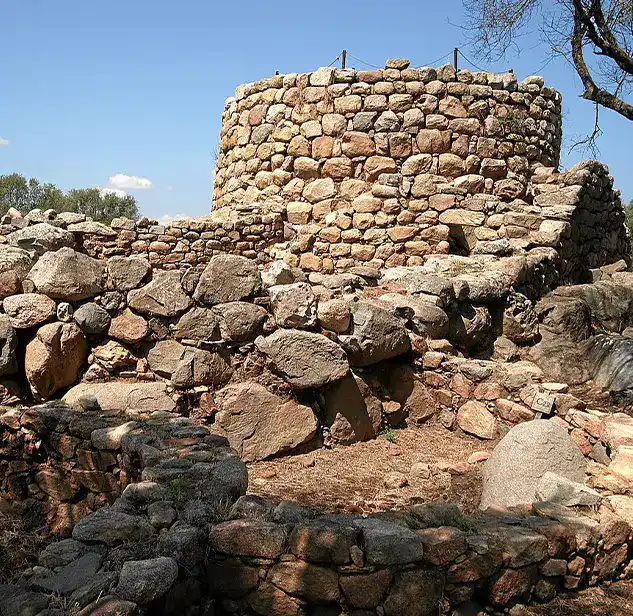
But what exactly are Nuraghe? They are megalithic towers built between the 2nd and 1st millennium BC, during the Bronze Age. These structures were created using large blocks of stone layered without mortar, following the dry-stone masonry technique. The entrance is often topped by a monolithic lintel leading to an internal chamber covered by a false dome called a tholos. Within the walls, a spiral staircase, carved into the thickness of the structure, often allowed access to the upper levels of the tower. There are also numerous Nuraghe without a tholos chamber, particularly older types known as corridor Nuraghe, where internal spaces are organised into passages and elongated rooms rather than circular vaulted chambers.
📷 Photo: Mboesch / Wikimedia Commons – Arzachena-tempietto-malchittu-a (CC BY-SA 4.0)

The Granite Coast: Nuraghe between Arzachena, Olbia, and Santa Teresa
Northeast Sardinia is often called the “Granite Coast” due to the dominant presence of this light, compact rock that defines much of the Gallurese landscape. Some of the region’s most important archaeological sites are concentrated among the wind-sculpted hills and rock formations across Arzachena, Olbia, and Santa Teresa di Gallura. The variety of Nuraghe along the coast makes this area a true open-air museum. where history and nature meet in truly unique ways.
Key sites you shouldn’t miss include:
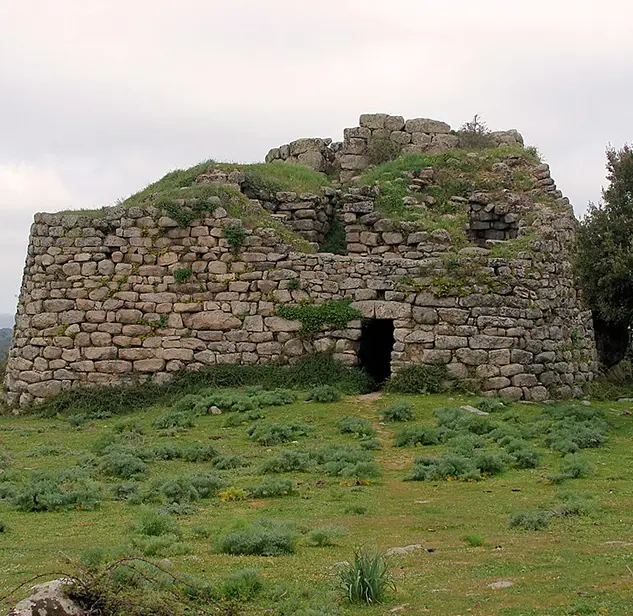
- Nuraghe La Prisgiona (Arzachena): Considered one of the best-preserved complexes in Sardinia, it is part of a vast Nuragic village that reveals the organization of daily life at that era.
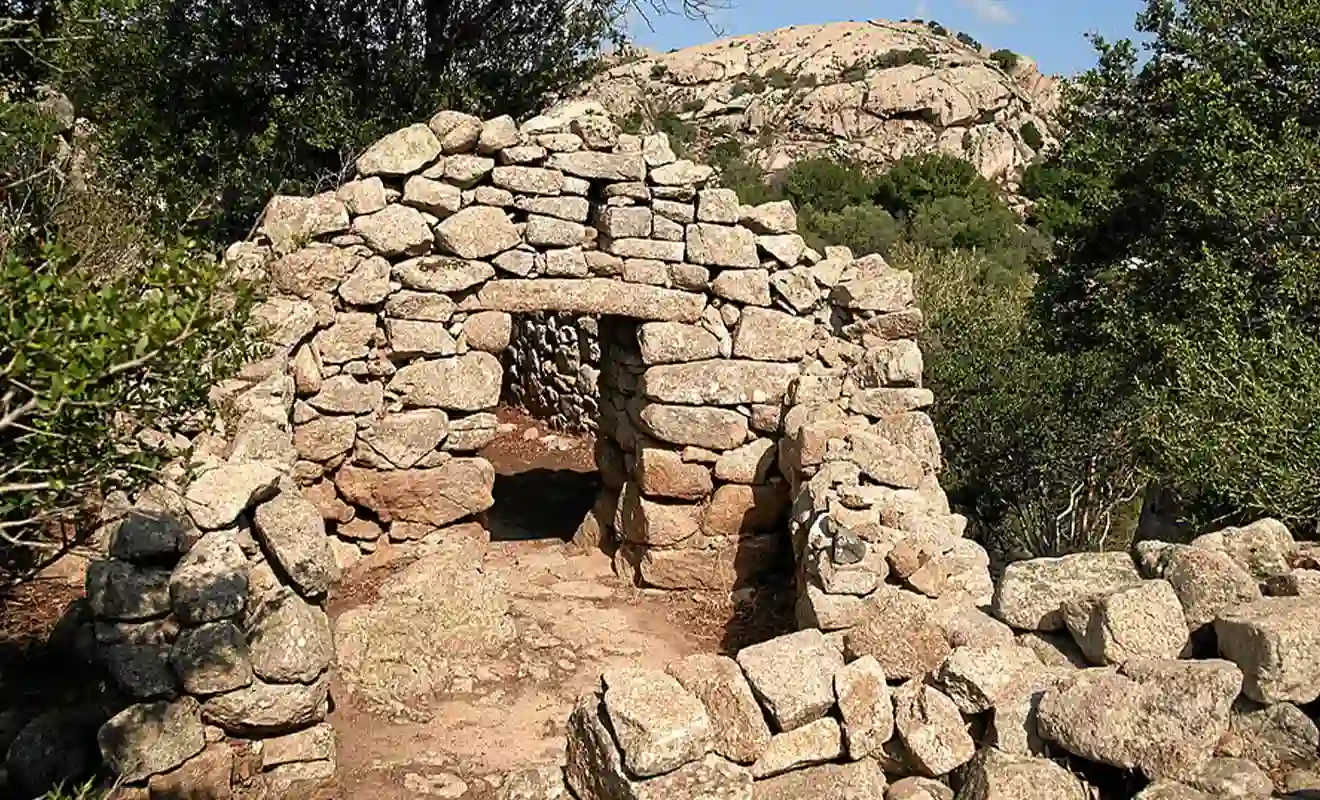
- Nuraghe Albucciu (Arzachena): A fascinating example of a corridor Nuraghe, a more ancient type of construction compared to the tower structures. The structure blends perfectly with the surrounding granite boulders, showing how ancient builders cleverly utilised the natural landscape.
- Nuraghe Riu Mulinu Cabu Abbas (Olbia): Located on a height overlooking the gulf, this site offers extraordinary views and suggests a strategic role in controlling the territory and trade routes between the coast and the hinterland of Gallura.
- Lu Brandali (Santa Teresa di Gallura): One of the most interesting structures in the area, where you will find not only the nuraghe but also the remains of a village and one of the typical Tombs of the Giants. These are collective funerary monuments that bear witness to the religious beliefs of the Nuragic civilisation and their connection to the cult of waters, a spiritual element widely diffused in prehistoric Sardinia.
- Coddu Vecchiu (Arzachena): Famous for its large, well-preserved Tomb of the Giants, it is one of the most evocative funerary sites in Gallura. The structure is characterised by a tall stele and a semicircular exedra, typical of the Nuragic tradition.
- Li Lolghi (Arzachena): An archaeological complex of great interest, where the nuraghe integrates with village remains and other prehistoric structures. Its panoramic position and accessibility make it an ideal stop for those wishing to explore ancient Gallura.
These sites offer an experience that combines archaeology, nature, and the coastal landscape: every nuraghe is a privileged observation point over the millenary history of Gallura, just a few steps away from the beaches and the crystal-clear sea.
📷 Photo: Stahlkocher / Wikimedia Commons – Arzachena Tomba dei Giganti Coddu Vecchju inside (CC BY-SA 3.0)

Inland nuraghe: itineraries through the Nuragic civilisation
Alongside the archaeological sites closest to the coast, the Gallura hinterland safeguards numerous other examples of Sardinian nuraghe, often immersed in the Mediterranean scrub or surrounded by granite hills. Visiting these places means embarking on a true journey to discover the Nuragic civilisation and its relationship with the territory. Among the most significant sites are:
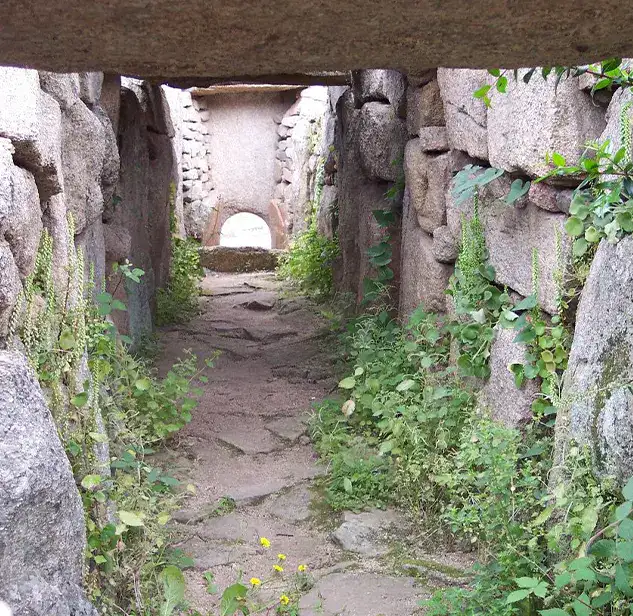
- Loelle: It is one of the best-preserved nuraghe in northern Sardinia. Nestled in a forest of holm oaks and cork oaks, it offers an extraordinary panoramic view of the surrounding granite landscape. Access is free, and the atmosphere of the place makes it a particularly evocative stop.
- Belveghile: It rises among the typical rocky hills of the area. Its elevated position suggests a function of territorial control and sighting, a common characteristic of many nuragic towers in the north of the island.
- Majori: It is one of the most visited and enhanced nuragic sites in Gallura. Well-preserved and staffed by specialised personnel, it allows visitors to explore the internal rooms of the tower and to understand the organisation of space during the Nuragic civilisation.
To navigate the numerous sites present in the territory, it can be useful to consult a map of the nuraghe of Sardinia, which allows you to identify the main archaeological complexes and build cultural itineraries between the coast and the hinterland. In this way, the visit becomes an opportunity to get to know not only the individual monuments but also the historical landscape that surrounds them.
📷 Photo: Hans Hillewaert / Wikimedia Commons – Nuraghe Loelle (CC BY-SA 3.0)

Tips for visiting the nuraghe of Sardinia
Exploring the nuraghe can be an interesting way to enrich a trip to northern Sardinia, especially for those who wish to discover the territory beyond the beaches and seaside resorts. These monuments of Sardinia are often set in evocative natural contexts and allow you to come into contact with a very ancient part of the island’s history.
The best time to visit these sites is generally spring or autumn, when temperatures are milder and the Gallura landscape shows itself in its most intense colours. In summer, it is still possible to organise archaeological excursions, preferring the morning hours or late afternoon to avoid the most intense heat.
Wearing comfortable shoes is always recommended, as many sites are reached through short paths or natural trails. Bringing water, a hat, and sunscreen can make the visit more comfortable, especially during the hottest months.
Visiting nuragic sites with children can be a particularly stimulating experience: many structures are easily accessible and allow for a close-up look at prehistoric construction techniques. Telling the little ones how Bronze Age communities lived and how these stone towers were built can transform the visit into an educational and engaging moment.
Integrating a visit to the nuraghe with coastal stops allows you to discover a different Sardinia, where millenary history coexists with the Mediterranean landscape. Between the sea, granite rocks, and ancient stone buildings, the nuraghe of Sardinia offer a unique opportunity to get closer to its culture and its most ancient memory.
📷 Photo: Mboesch / Wikimedia Commons – Arzachena-nuraghe-la-prisgiona (CC BY-SA 4.0)