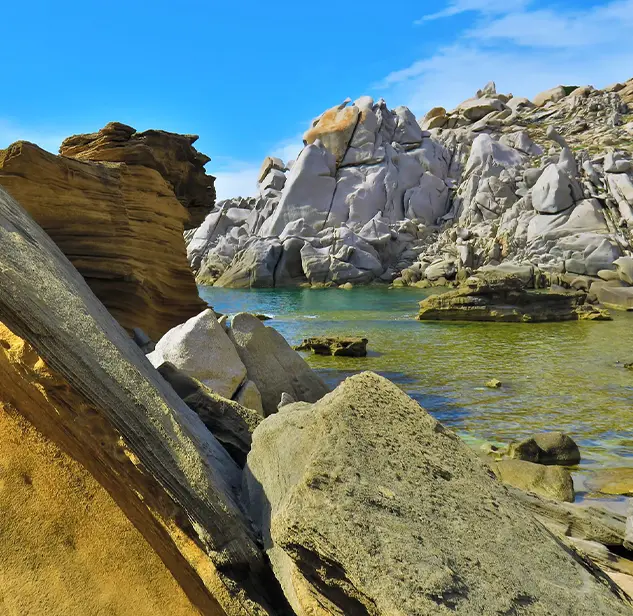
The Strait of Bonifacio: a unique experience
Between Sardinia and Corsica: a sea of legends
Between Sardinia and Corsica lies a unique marine passage where the deep blue of the Mediterranean meets granite cliffs plunging into the sea: the Strait of Bonifacio. This strait, besides being a natural border between two territories rich in history and culture, is famous for its wild beauty, sheer cliffs, and deep, sometimes impetuous waters. The area is protected as a nature reserve, a place where Mediterranean flora and fauna coexist with legends and myths linked to navigation and sudden storms. The strait or Bocche di Bonifacio as is known by the locals, is not just a passage between Sardinia and Corsica: it is a symbol of the bond between the two lands and an experience that fascinates anyone who crosses it.
📷 Photo: Gabridelca / Wikimedia Commons – Scogliere bocche di bonifacio (CC BY-SA 3.0)

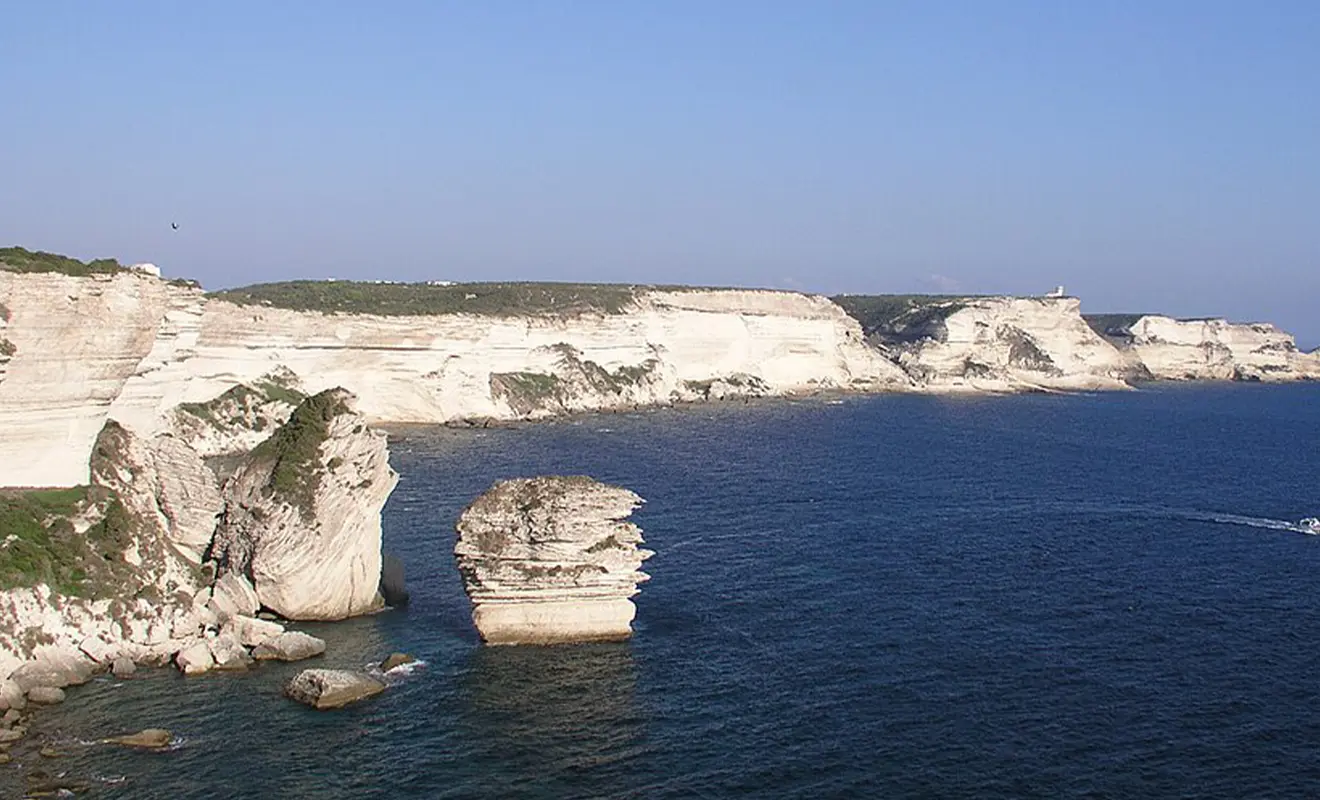
Rough seas and legends
The sea in the Strait of Bonifacio can be particularly rough, making the crossing an intense and evocative experience. The strait separating Sardinia from Corsica is indeed one of the most dynamic stretches of water in the Mediterranean, where wind, currents, and geographical shape contribute to creating often challenging sailing conditions.
One of the phenomena characterising this area is the Venturi effect. The narrowing of the strait between Cape Pertusato, in southern Corsica, and Punta Falcone, in northern Sardinia, accelerates the passage of winds and increases their intensity. This phenomenon can generate sudden gusts and waves higher than those in surrounding areas, especially when the Mistral blows. It is not uncommon for the weather in the Strait of Bonifacio to change rapidly, transforming a calm sea into a rougher stretch within a few hours.
Several natural factors contribute to making this stretch of sea so unique:
- Venturi effect: the narrowing of the strait accelerates the wind between Sardinia and Corsica.
- Intense marine currents: water flows intersect between the Tyrrhenian Sea and the Western Mediterranean.
- Seabeds and outcropping rocks: the presence of islets and rocks makes the landscape spectacular but historically complex for navigation.
- Frequent winds: particularly the Mistral, which can generate rough sea conditions in the Strait of Bonifacio. These winds often blow between 20 and 35 knots, with gusts that can exceed 40 knots during periods of peak intensity. The combination of sustained winds, the Venturi effect, and intense marine currents makes the Strait of Bonifacio among the most dynamic stretches of sea in the Mediterranean.
For these reasons, since ancient times, the Strait of Bonifacio has been considered a challenging passage for mariners, especially for smaller vessels. The danger of the strait is also evidenced by historical episodes such as the shipwreck of the Sémillante in 1855, when a French frigate ran aground during a storm, causing the loss of hundreds of lives. Today, navigation is constantly monitored, and modern technologies make the crossing safe while maintaining the wild charm of this stretch of sea.
📷 Photo: eg65 (Elena Giglia) / flickr – Falesia di capo Pertusato (CC BY 2.0)
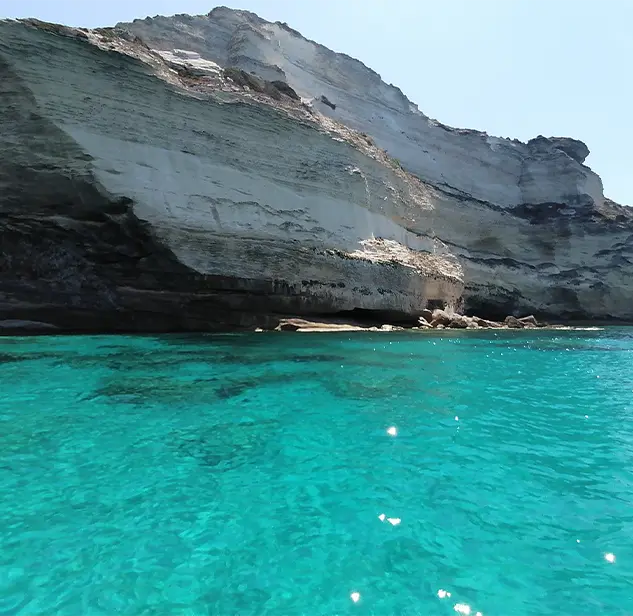
Landscapes, fauna, and islands of the Strait of Bonifacio
Beyond the strength of the currents and wind, the Strait of Bonifacio offers spectacular landscapes and some of the richest biodiversity in the Mediterranean. This stretch of sea is indeed a true natural corridor between Sardinia and Corsica, where granite cliffs, white limestone cliffs of the Bonifacio Coast, often vertical and shaped by the wind and sea, islets, and transparent seabeds create a unique environment from a naturalistic perspective.
Among the most evocative places characterising this area are:
- La Maddalena Archipelago: located on the Sardinian side of the strait, it is a group of islands and islets characterised by crystal-clear waters, white sandy beaches, and wind-sculpted rocks. The archipelago is now a national park and represents one of Sardinia’s most precious marine environments.
- Lavezzi Islands: just south of Corsica, this granite archipelago is known for its clear seabeds and rich marine fauna. Rocks polished by the sea and small coves make the landscape particularly striking.
- Cavallo Island: one of the most fascinating islands in the strait, featuring turquoise waters, granite rocks, and small protected bays that contribute to the variety of the Strait of Bonifacio’s ecosystem.
Among marine caves, hidden coves, and granite coasts, these islands provide an ideal habitat for numerous animal species. During navigation or excursions, it is possible to observe:
- Seagulls and seabirds nesting among the cliffs;
- Flamingos in wetlands and coastal lagoons;
- Various species of Mediterranean fish inhabiting the clear seabeds of the strait;
- In some cases, even the presence of the rare monk seal, a symbol of Mediterranean biodiversity.
The islands and islets of the Strait of Bonifacio represent a perfect example of a protected ecosystem, where every inlet, rock, or stretch of coast contributes to the natural wealth of the territory. For this reason, much of the area is now protected as an international nature reserve, shared between Italy and France.
📷 Photo: AlexanderVanLoon / flickr – Islands north of La Maddalena (CC BY – SA 2.0)
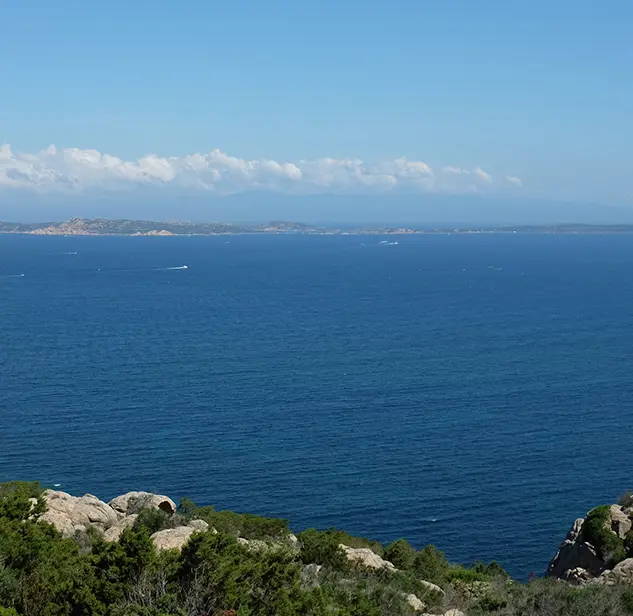
How to cross the Strait of Bonifacio
The easiest way to experience the Strait of Bonifacio is to rely on Ichnusa Lines ferries, which connect Santa Teresa di Gallura to Bonifacio in Corsica. The crossing takes about 50 minutes, time enough to enjoy the open sea and admire the La Maddalena Archipelago, the Lavezzi Islands, and the granite coasts of Gallura, a unique landscape where the intense blue of the Mediterranean meets rock formations shaped by wind and time.
Modern Ichnusa Lines ships ensure a comfortable and safe journey even in the case of rough seas in the Strait of Bonifacio, thanks to stabilisers and spaces designed to guarantee passenger comfort. The crew on board is available to assist during boarding and disembarkation, making the crossing simple even for first-time travellers or those with vehicles.
Crossing the Strait of Bonifacio allows you to discover a territory where wild nature, millenary history, and Mediterranean legends intertwine, transforming even a short crossing into an unforgettable adventure.
📷 Photo: Rolf Dietrich Brecher / flickr – Sardengna – Santa Teresa Gallura (CC BY 2.0)