The Lavezzi Islands: a natural treasure between Sardinia and Corsica
Lavezzi Islands: unspoiled nature and crystal-clear waters in the Strait of Bonifacio
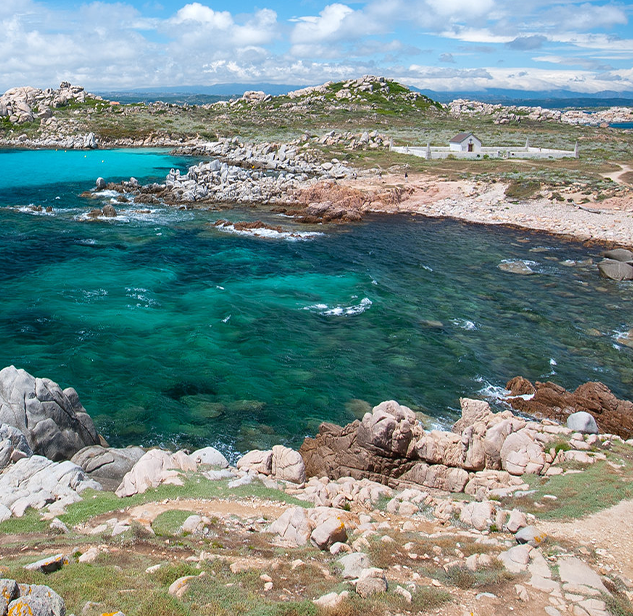
The Lavezzi Islands are a gem at the heart of the Mediterranean, located in the Bonifacio Strait, locally known as Bocche di Bonifacio. This granite archipelago, part of the Natural Reserve, is a sanctuary of biodiversity where Posidonia oceanica colours the seabed in vivid shades and protects the marine ecosystem. It is the ideal destination for those seeking slow tourism, between ancient history and wild nature.
This archipelago is one of the most fascinating destinations for nature lovers, trekking enthusiasts and snorkellers, as well as for those who wish to escape everyday life, immersed in breathtaking landscapes far from large tourist crowds. The Lavezzi Islands are therefore an ideal destination for a half-day or full-day excursion, combining outdoor activities, relaxation and discovery of the Mediterranean ecosystem.
How to reach the Lavezzi Islands
The Lavezzi Islands are the wild heart of the Bocche di Bonifacio, nestled between the Corsican and Sardinian shores. This archipelago, located in one of the meteorologically most complex stretches of sea in the Mediterranean, acts as a natural bridge between Corsica and Sardinia. It is therefore essential to check the weather forecast before visiting.
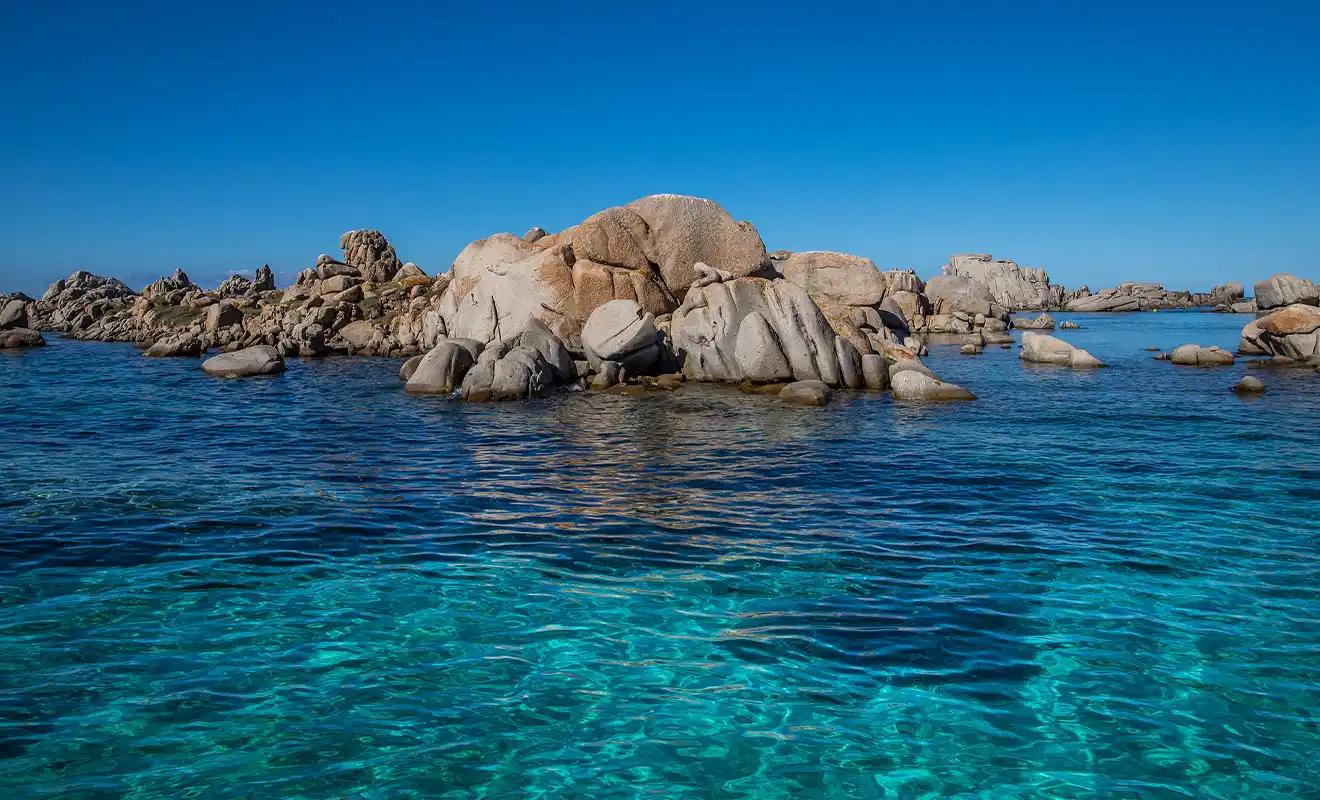
The archipelago is not a single entity, but a collection of islets, reefs and minor rocks rising above the water. The name “Lavezzi” refers both to the main island and to the entire archipelago, while in the Corsican language the main island is called “Lavezzu“. Of all the islets, Isola Lavezzi stands out as the largest and the only one accessible on foot, with its grey granite shaped over centuries by the Maestrale wind and saltwater, giving rise to jagged cliffs, natural arches and evocative coves.
Among the most scenic bays on the island, Cala Lazarina stands out: a small inlet sheltered by granite rocks where the water takes on emerald tones and where boats and dinghies often anchor during the summer season.
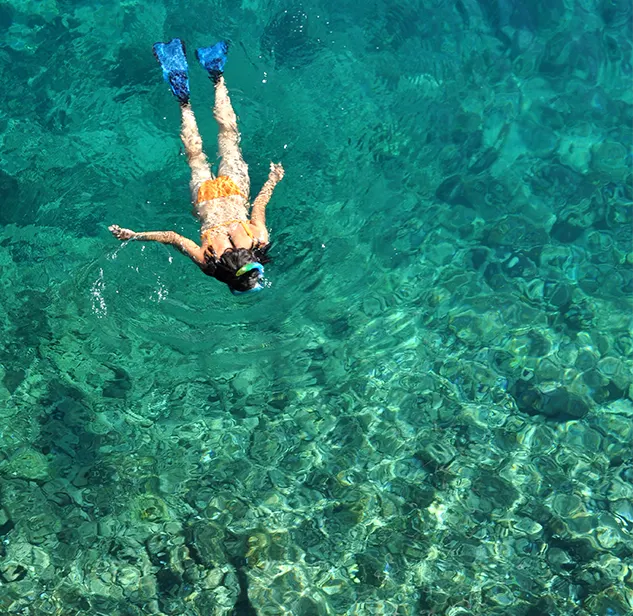
The waters surrounding the islands are renowned for their clarity and the beauty of their seabeds. This area is a true sanctuary for snorkelling and diving enthusiasts: the full protection guaranteed by the Natural Reserve allows you to observe a density of marine fauna now rare elsewhere. In particular, it is possible to explore the underwater trail of Cala Achiarina, an underwater nature trail designed to reveal the richness of the seabed and the Posidonia oceanica meadows, fundamental for the balance of the Mediterranean marine ecosystem.
Given the wild nature of the island and the fact that there are no signs, consulting a detailed map is essential to optimise the time available.
This allows you to:
- Identify the main bays: locate points such as Cala di Roto (famous for its turquoise waters) or Cala del Turco
- Navigate the internal paths: the island of Lavezzi is crossed by tracks that lead to places of great historical and scenic value.
- Safety and environmental respect: the map helps to identify the integral reserve zones where access or bathing may be restricted, allowing you to enjoy the spectacle of nature without disturbing the protected ecosystems or risking trampling the rare endemic flora.
Reaching this paradise is possible via several options, depending on your starting point:
- From Bonifacio (Corsica): Regular ferries take you to the island in 30 minutes. Please note: a landing tax is charged (already included in the ticket or payable on arrival), dedicated to the conservation of the reserve.
- From Santa Teresa Gallura (Sardinia): for those in Sardinian territory, the ideal solution is to rely on organised excursions or private boat hire.
- Private hire: for those who want maximum independence, hiring a dinghy allows you to explore more remote spots as well.
If you are wondering whether you can bring your dog, the answer is unfortunately no. To protect the wildlife and the ground-nesting birds, access for dogs is strictly prohibited throughout the reserve.
What to see: between history and archaeology
The island is not just nature; it is an open-air museum housing millennia-old traces and moving memories:
- The wreck of the Sémillante: The island is sadly known for the disaster of the French frigate Sémillante (1855). It is possible to visit the cemeteries of Achiarino and Furcone, where the remains of the sailors rest in an atmosphere of solemn silence among the rocks.
- Traces of the past: History enthusiasts can discover the Neolithic rock shelter, the remains of an old bergeria (sheepfold) and the ruins of the Santa Maria chapel, testament to ancient religious and pastoral settlements.

What to do and what to visit
The island of Lavezzi offers varied experiences for all types of visitors. Among the most appreciated activities:
- Snorkelling and diving: the clear, transparent waters conceal a rich and colourful marine fauna, with fish of various species, small underwater caves and rocky seabeds ideal for those who enjoy snorkelling and diving.
- Trekking and panoramic paths: the trail that crosses the island offers spectacular views of the Bocche di Bonifacio and the Sardinian coast, with the chance to spot seabirds. Other routes lead to the Marine Cemeteries and to small hidden coves among the granite boulders.
- Relaxing on the beaches: these are ideal spots to take a break in the sun, with crystal-clear sea and spectacular panoramas. Among the most scenic are Cala di u Grecu, Cala della Chiesa, Cala Lazarina, Cala di l’Achiarino and the Semillante Lavezzi beach. Some beaches, more sheltered, are perfect for families and for those seeking calm waters; others, more exposed to the wind, offer ideal conditions for those who love a rougher sea.
- Photography and birdwatching: the natural reserve protects numerous species of seabirds, including gulls and cormorants, as well as typical Mediterranean flora, making the Lavezzi a paradise for nature lovers and photographers.
The visit can be organised according to your own pace: setting off early in the morning, you can devote the whole day to snorkelling, trekking and relaxation, or choose shorter excursions to combine the Lavezzi with other natural spots in the strait.
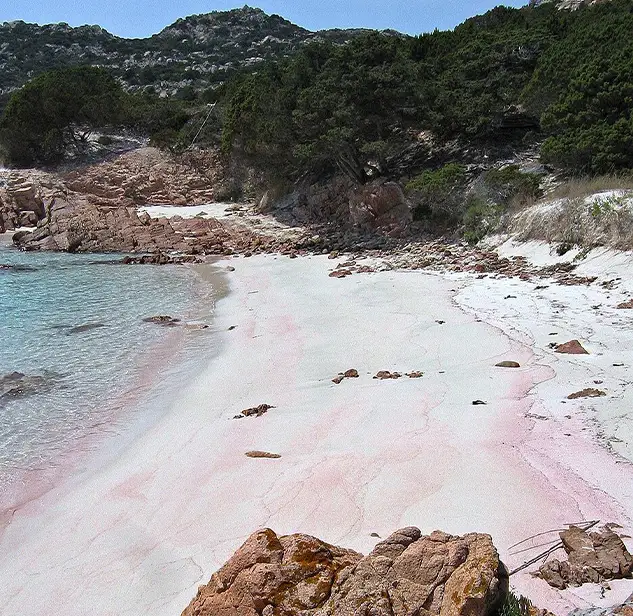
📷 Foto: Luca Bittau / Wikimedia Commons – Spiaggia Rosa, Cala di Roto (Isola di Budelli), Arcipelago di La Maddalena, Sardegna, Italia, Mar Mediterraneo (CC BY-SA 4.0)
Organising a visit to the Lavezzi Islands
Visiting the Lavezzi archipelago is not the typical beach outing, but a genuine immersion in a natural ecosystem. The archipelago is entirely without tourist infrastructure: you will find no bars, beach clubs, shops or refreshment points. This absence of services is what preserves its charm, but requires meticulous planning to prevent a day of pleasure from turning into an ordeal.
It is essential to be 100% self-sufficient. Bringing a generous supply of water is the first step, as the reflection of the sun off the white granite can significantly raise the perceived temperature. Food must also be organised in advance with packed lunches, preferring reusable containers to minimise waste production.
To make the most of this granite paradise, here are some practical tips for your organisation and the strict rules of the Natural Reserve:
- Environmental protection and prohibitions: As this is an integral protection area, strict rules apply to preserve biodiversity. It is absolutely forbidden to leave the marked paths so as not to trample the endemic flora, just as it is prohibited to climb on rock formations to prevent erosion and ensure safety. To protect the fauna and air quality, smoking is prohibited across the entire island, as is bringing pets, which could disturb the nesting seabirds.
- Respect for natural heritage: It is strictly forbidden to collect plants, shells or minerals: every element must remain in place. Technological and extractive activities are also restricted: the use of drones is prohibited and, to protect fish restocking, fishing is strictly forbidden.
- Waste management: As the Lavezzi are the beating heart of a protected natural reserve, it is important not to leave any rubbish. All waste must be placed in a bag and taken back to the mainland. Preserving this delicate balance is the responsibility of every visitor.
- Clothing and protection: the paths connecting the various coves are made of earth and rock. Flip-flops are not recommended for moving around the island; it is better to wear light trekking shoes or sport sandals with a good sole. Do not forget a hat and sunglasses.
- Outdoor activity equipment: for those who want to explore the underwater world, a mask, fins and snorkel are indispensable. The seabeds of the Lavezzi are among the most teeming with life in the Mediterranean and offer incredible sights just a few metres from the shore. A light backpack will keep your hands free during walks, while a microfibre towel (less bulky) will be perfect for breaks on the smooth rocks.
- Orientation and safety: having a paper map with you, or having downloaded an offline version on your phone, is useful for identifying historical points of interest and coves less exposed to that day’s wind.
Visiting the Lavezzi means disconnecting from the chaos of civilisation to reconnect with the rhythms of the sea. It is a rare opportunity to spend a day amid waters of an almost unreal blue and breathtaking panoramas stretching to the white cliffs of Bonifacio. Every view, from the profile of the lighthouse to the silent expanses of granite, will remind you why this place is considered an inestimable treasure of the Mediterranean.
📷 Photo: Jean-Baptiste Bellet / Flickr -Iles Lavezzi (CC BY- 2.0)