Weekend in Sardinia: what to see in 48 hours
48 Hours in Sardinia: The Ultimate Itinerary for Sea, History, and Flavors
Forty-eight hours in Sardinia are never enough. But if you choose your starting point wisely and know where to look, they can become a heady mix of sea, history and flavours amid granite cliffs, genuine food and a strait that is legendary. Here’s an itinerary designed for those with little time but no intention of missing out.
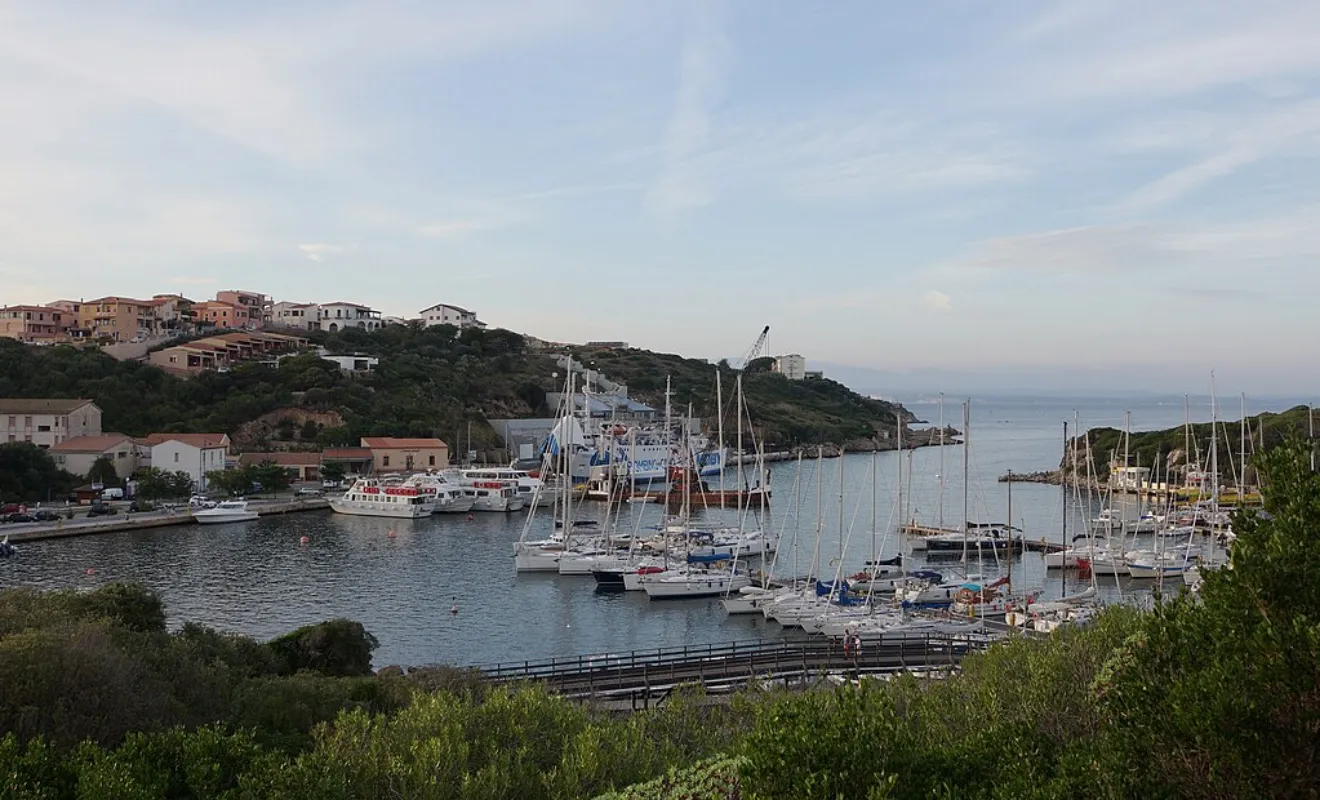
📷 Photo: Tatyana Peshkova/ Wikimedia Commons – Santa Teresa Gallura harbour (CC BY-SA 4.0)
Why start from Santa Teresa di Gallura
Santa Teresa di Gallura is the arrival point of the Ichnusa Lines ferry from Bonifacio, but it’s much more than that: it’s an ideal base for exploring northern Sardinia by car or on foot, with spectacular beaches and a lively historic centre within walking distance. The town winds along a promontory forty metres above sea level, founded by Victor Emmanuel I of Savoy in the early nineteenth century on the site of ancient Longosardo. The surrounding sea is among the most beautiful in Sardinia: turquoise in the sheltered coves, deep blue out towards the open water.
Once you disembark from the ferry, the weekend can begin right away. There’s no need to take the car: the port is just a few minutes’ walk from the centre.
How to get there: the Ichnusa Lines ferry connects Bonifacio to Santa Teresa di Gallura in around 50 minutes, with multiple daily sailings during the summer season. It’s the ideal solution for those arriving from Corsica or wanting to combine the two islands in a single weekend.
Where to stay: Santa Teresa offers hotels, B&Bs and apartments for every budget. To sleep right by the sea, the areas of Santa Reparata and La Marmorata offer quieter options compared to the town centre.
When to go: May, June and September are the ideal months — perfect climate, fewer crowds on the beaches, services already up and running. July and August are beautiful but very busy: book everything well in advance.
With or without a car: Santa Teresa is easy to explore on foot. For Capo Testa, La Maddalena and the surrounding area, a rental car or a bike opens up more possibilities. Those arriving by ferry without a vehicle can rely on ARST buses to reach Palau and Olbia, and on local shuttles for more distant beaches.
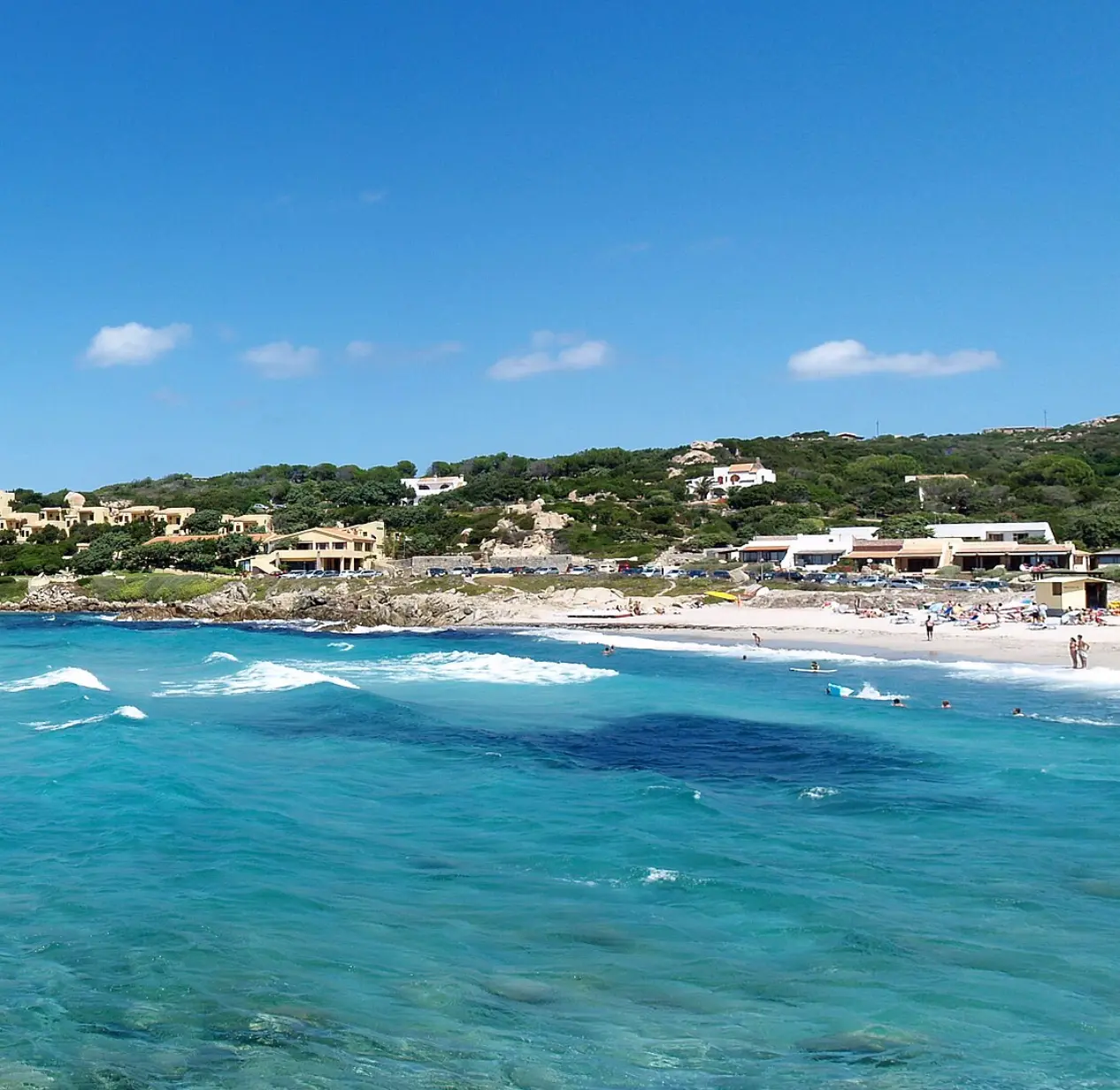
📷 Photo: Kiban/ Wikimedia Commons – Santa Reparata (CC BY-SA 3.0)
DAY 1 — The Heart of Gallura
Morning: Rena Bianca and the Longonsardo Tower
Start with the simplest thing: a walk to Rena Bianca beach, Santa Teresa’s town beach, awarded the Blue Flag continuously since 1987. Clear sand, shallow and transparent waters, very easy to reach on foot from the centre, it’s the perfect place for a first encounter with the sea of Gallura.
From there, just a few steps away, you’ll come across the Longonsardo Tower: built between 1577 and 1599 on the orders of Philip II of Spain, it’s the largest coastal tower in Gallura. From its terrace, 40 metres above sea level, a view opens up over the Strait of Bonifacio and, on clear days, all the way to the white cliffs of Bonifacio. Worth the visit for the view alone.
Afternoon: Capo Testa and the Valle della Luna
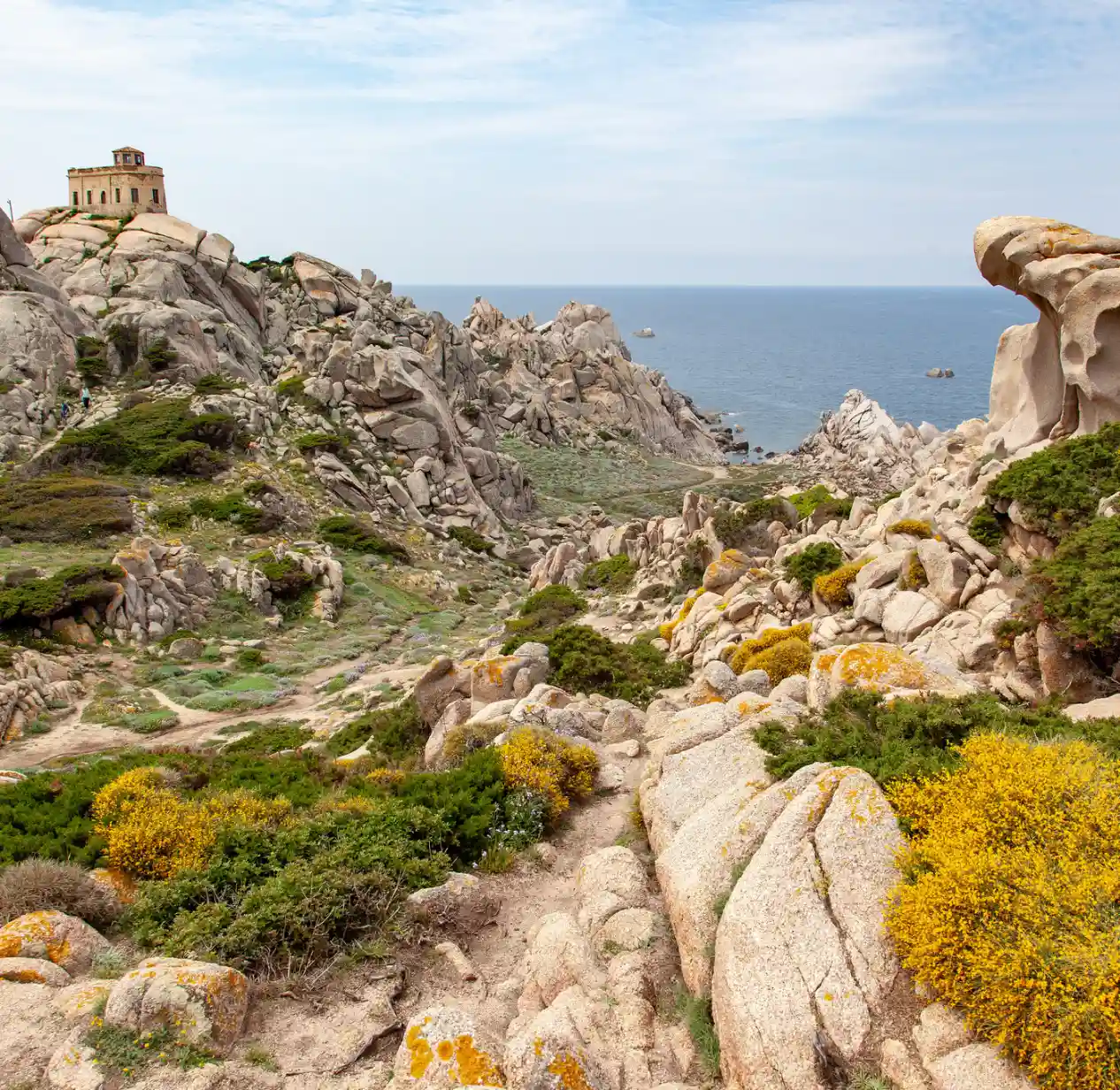
A 10-minute drive from Santa Teresa, Capo Testa is one of the most distinctive places in all of Sardinia. The granite promontory, joined to the mainland by a narrow sandy isthmus, offers two twin beaches, Rena di Levante and Rena di Ponente, and an inland area of wind-shaped rocks that look like sculptures. This area, named Valle della Luna (Moon Valley) by a hippie community in the 1960s who still return there every summer, has a unique atmosphere: labyrinths of pink granite, wild cacti, silence broken only by the wind.
If you feel like walking, a coastal path leads to the Capo Testa Lighthouse, the most important in northern Sardinia, built in 1845.
Evening: dinner in Santa Teresa
Head back into town for dinner. Santa Teresa has a solid food scene: local mullet bottarga, malloreddus with Sardinian sausage ragù, fish fresh off the boat. Restaurants in the centre come alive after 8 pm, and the evening stroll through the main square, Piazza Vittorio Emanuele, is the town’s collective ritual.
📷 Photo: Nicolas Vollmer/ Flickr – Capo Testa (CC BY 2.0)
DAY 2 — The Archipelago and the Open Sea
Morning: excursion to the La Maddalena Archipelago
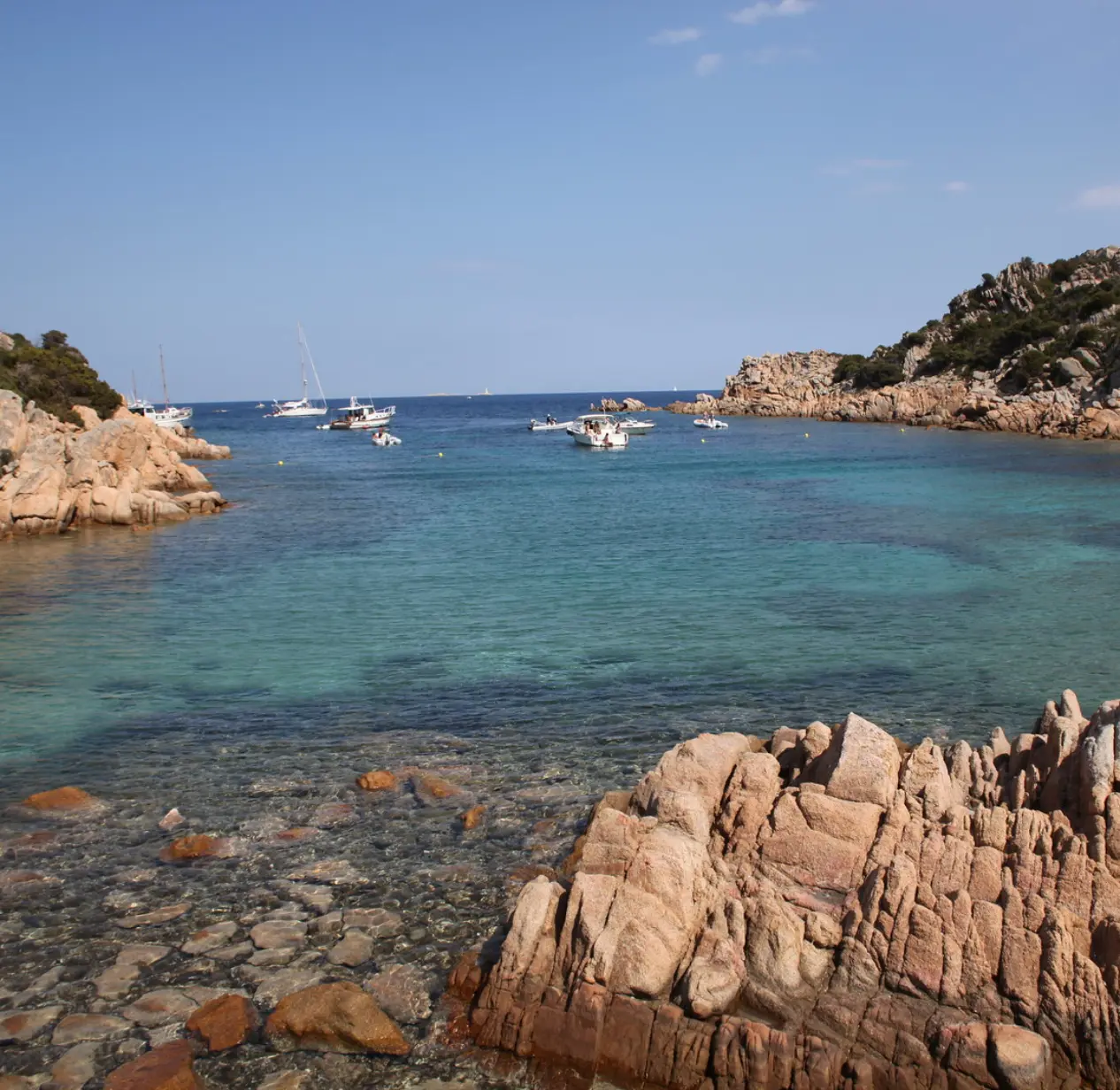
The second day is dedicated to the open sea. From the port of Santa Teresa (or from Palau, a 20-minute drive away), boat excursions depart daily to the La Maddalena Archipelago, the marine national park that groups together seven main islands and dozens of smaller islets between Sardinia and Corsica. The waters are among the clearest in the Mediterranean: emerald green in the sheltered coves, cobalt blue offshore. Budelli beach, with its pink-tinged sand, is formally closed to swimmers to preserve its ecosystem, but can be admired from the boat.
Afternoon: the Lavezzi Islands or a trip to Bonifacio (optional)
If you still have time before the return ferry, the Lavezzi Islands are reachable on an excursion from Santa Teresa. This granite archipelago, just south of Corsica, is part of the Bouches de Bonifacio Nature Reserve: crystal-clear waters, white beaches, near-total silence. The return crossing with Ichnusa Lines from Santa Teresa can be taken in the late afternoon, bringing the weekend full circle perfectly.
What not to miss before boarding
Before catching the return ferry, it’s worth stopping for one last ice cream or coffee in Santa Teresa’s central square, looking out towards the sea. And if time allows, a quick stop at the Lu Brandali nuragic site, just a few minutes’ drive from the centre, adds a touch of history to the weekend: the site, dating between the 14th and 10th centuries BC, is one of the most interesting in Gallura.
A weekend between two islands: the idea for those who want more
The beauty of starting from Bonifacio and arriving in Santa Teresa, or vice versa, is that the weekend can become an experience spanning two completely different islands, separated by just 50 minutes at sea. Bonifacio with its limestone cliffs, medieval citadel and crystal-clear waters. Santa Teresa with its granite rocks, the most authentic side of Gallura and the atmosphere of the northern harbour. Two nearby worlds, joined by a strait that has a great deal to tell.